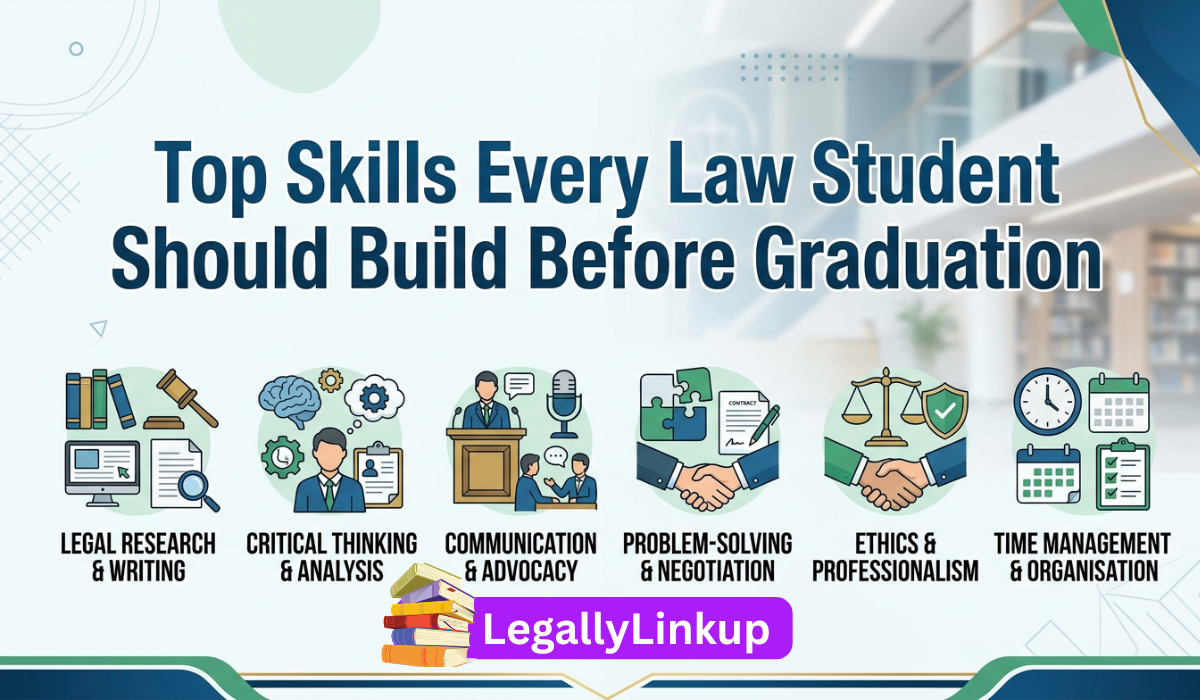
Law school teaches legal subjects, statutes, case laws, and theory. But when students enter internships, courtrooms, law firms, companies, or judicial preparation, many realize something important:
Academic knowledge alone is not enough. The legal profession demands much more than passing exams.
Lawyers, judges, corporate legal professionals, researchers, and policy experts all rely on practical skills developed over time.
That’s why smart law students start building professional skills early.
Whether you want to become a litigator, corporate lawyer, legal consultant, academic, entrepreneur, or judiciary aspirant in India, these skills can make a major difference in your career.
Why Skill Development Matters in Law School
Many students focus only on:
- Semester exams
- Assignments
- Attendance
- Notes
- Internal assessments
But recruiters, seniors, clients, and law firms often look beyond marks.
They often evaluate:
- Communication
- Research ability
- Drafting quality
- Professional attitude
- Analytical thinking
Skills often create opportunities.
1. Legal Research Skills
One of the most important skills in law is research.
Law students must learn how to find:
- Statutes
- Case laws
- Amendments
- Notifications
- Regulatory updates
Strong legal researchers often perform better during internships and placements.
Useful research platforms include:
SCC Online
Manupatra
India Code
Learning how to find the right law quickly is a major advantage.
2. Bare Act Reading Skills
Every strong legal career starts with understanding statutory language.
Students should regularly read:
Constitution of India
Indian Contract Act, 1872
Transfer of Property Act, 1882
Bare Act reading helps develop:
- Interpretation skills
- Legal language understanding
- Statutory analysis
This skill helps in exams, internships, and litigation.
3. Legal Drafting Skills
Lawyers write constantly.
Students should practice drafting:
- Legal notices
- Contracts
- Applications
- Affidavits
- Petitions
- Client notes
- Case summaries
Good drafting often creates strong professional impressions.
Clear writing builds credibility.
4. Communication Skills
Law is a people profession.
You may interact with:
- Clients
- Judges
- Senior advocates
- Corporate teams
- Colleagues
- Opposing counsel
Strong communication improves:
- Confidence
- Negotiation
- Interviews
- Networking
- Client trust
Both speaking and writing matter.
5. Public Speaking Skills
Many law students fear speaking publicly.
But legal careers often involve:
- Moot courts
- Presentations
- Client meetings
- Court arguments
- Negotiations
Public speaking improves confidence.
Even if you choose corporate law, presentation skills matter.
6. Analytical Thinking
Law is not just about memorizing sections.
It’s about asking:
- What is the issue?
- What law applies?
- What are both sides arguing?
- What risks exist?
Analytical thinking helps with:
- Case strategy
- Contract review
- Legal opinions
- Policy interpretation
This skill separates average students from strong professionals.
7. Time Management
Law students often struggle to balance:
- Classes
- Internships
- Assignments
- Competitions
- Exam preparation
- Networking
Time management reduces stress and improves productivity.
Successful students often plan weekly goals.
8. Networking Skills
Legal careers often grow through relationships.
Networking can help students connect with:
- Advocates
- Partners
- Professors
- Alumni
- Recruiters
Professional platforms like: –LinkedIn
Can help build valuable connections.
Networking is about professional visibility—not shortcuts.
9. Professional Ethics
Legal professionals handle trust, confidentiality, and responsibility.
Students should develop:
- Integrity
- Punctuality
- Respect
- Confidentiality
- Accountability
Ethics often define long-term reputation.
10. Technology Skills
Modern law increasingly uses technology.
Students should understand:
- Online legal databases
- Document formatting
- Presentation tools
- Research software
- Digital communication
Technology improves efficiency.
11. Case Law Reading Skills
Students should regularly study judgments from courts like:
High Courts
Supreme Court of India
Case law reading improves:
- Legal reasoning
- Argument building
- Judicial understanding
Court reasoning teaches real law.
12. Internship Discipline
Internships test more than knowledge.
Students should develop:
- Punctuality
- Observation
- Note-taking
- Professional email writing
- Follow-up habits
Simple discipline often creates long-term opportunities.
Common Mistakes Law Students Make
Avoid these common mistakes.
1. Focusing Only on Marks-Marks matter—but skills often create career opportunities.
2. Ignoring Internships-Practical experience matters.
3. Avoiding Public Speaking-Confidence grows only through practice.
4. Waiting Until Final Year-Skill-building works best when started early.
Final Skill Checklist
Before graduation, every law student should work on:
✅ Legal research
✅ Bare Act reading
✅ Drafting
✅ Communication
✅ Public speaking
✅ Analytical thinking
✅ Networking
✅ Technology
✅ Ethics
✅ Internship discipline
Final Thoughts
Law school is not only about earning a degree. It is about building the professional foundation for your future. Students who start building skills early often enter the profession with more confidence, better opportunities, and stronger career direction. Start with one skill today. Small daily progress often creates extraordinary legal careers.