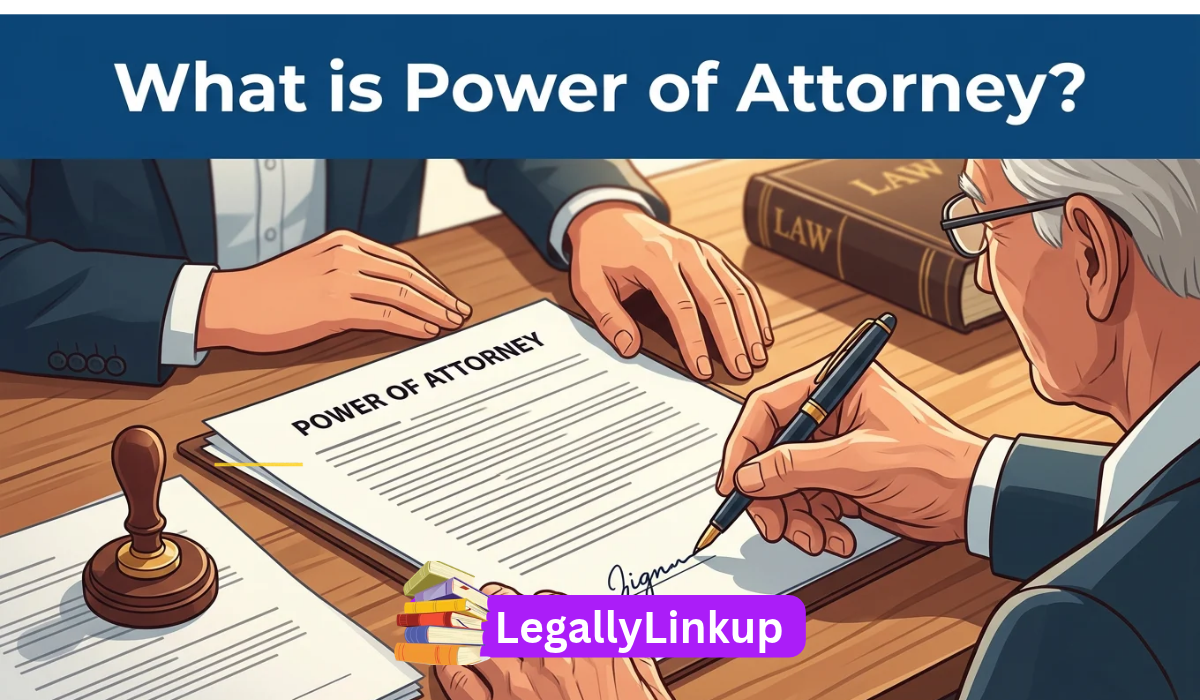
A Power of Attorney (POA) is a legal document that allows one person to authorize another person to act on their behalf. It can be particularly useful when a person cannot personally handle a legal, financial, property or business-related matter.
For example, a person living in another city or country may give a trusted family member authority to manage certain property-related work in India.
However, a Power of Attorney gives significant authority to another person, so it should be prepared carefully and clearly.
What Is a Power of Attorney?
A Power of Attorney is a legal authorization through which one person gives another person the authority to perform specified acts on their behalf.
The person giving the authority is commonly called the Principal or Executant, while the person receiving the authority is called the Attorney Holder or Agent.
The authority can be broad or limited depending on the wording of the document.
For example, a POA may authorize someone to:
- Manage a property
- Represent the principal before certain authorities
- Handle specified banking or financial matters
- Sign particular documents
- Manage certain business activities
The exact powers should be clearly mentioned rather than relying on general wording.
Types of Power of Attorney
1. General Power of Attorney
A General Power of Attorney (GPA) gives wider authority to the attorney holder to perform several acts on behalf of the principal.
It may cover matters such as property management, administrative work, financial transactions or representation before authorities, depending on the document.
Because the powers can be extensive, a GPA should only be given to a person whom the principal completely trusts.
2. Special or Specific Power of Attorney
A Special Power of Attorney (SPA) gives authority for a particular purpose or transaction.
For example, a person may authorize someone to appear before a particular authority or complete a specific property-related transaction on their behalf.
Once the specified purpose is completed, the authority may no longer be required, depending on the terms of the document.
When Is a Power of Attorney Useful?
A POA can be useful in many situations.
A person who is unable to travel may authorize another person to handle a specific matter. Non-resident Indians may also use a POA for certain matters in India, subject to applicable legal requirements.
Businesses may use authorizations to allow representatives to perform specified activities.
It can also be useful where a person is physically unavailable but needs someone to represent them for a particular legal or administrative purpose.
What Should a Power of Attorney Contain?
A properly drafted POA should clearly identify the people involved and describe the authority being granted.
Generally, it should include:
- Full details of the principal
- Full details of the attorney holder
- The purpose of granting the authority
- Specific powers being given
- Any limitations or conditions
- Duration, where applicable
- Date and place of execution
- Signatures and other required formalities
The description of powers should be precise. Vague or unnecessarily broad language can create disputes later.
Does a Power of Attorney Need Registration?
The requirement for stamp duty, notarization or registration depends on the nature and purpose of the Power of Attorney and the applicable law.
Some POAs may be notarized, while certain documents or transactions may require registration.
Property-related transactions require particular care because a Power of Attorney itself does not automatically transfer ownership of property.
The applicable stamp duty and registration requirements can also vary by state and circumstances. Therefore, it is advisable to verify the requirements applicable to the specific transaction before executing the document.
Can a Power of Attorney Be Revoked?
Yes, a Power of Attorney can generally be revoked by the principal, subject to the terms of the document and applicable law.
A revocation should be properly documented and communicated to the attorney holder and, where relevant, to concerned third parties or authorities.
However, there can be exceptions where the authority is coupled with an interest or where the law restricts revocation. Therefore, legal advice may be appropriate in such situations.
Important Precautions Before Giving a POA
A Power of Attorney should not be signed casually.
Before executing one, consider the following:
Choose the attorney holder carefully. The person may receive significant authority depending on the document.
Clearly define the powers. Give only the authority that is actually required.
Check the document carefully before signing. Understand every power and condition mentioned in it.
Keep a copy of the executed document. Important supporting documents should also be safely preserved.
Check local stamp and registration requirements. Requirements can differ depending on the transaction and state.
Review old POAs. If a previous authorization is no longer required, consider whether it should be revoked.
Power of Attorney Does Not Mean Transfer of Ownership
One important point is often misunderstood: giving someone a Power of Attorney does not by itself make that person the owner of the principal’s property.
A POA primarily creates authority to act on behalf of another person. Ownership and transfer of property are separate legal matters and may require the appropriate legally recognized documents and formalities.
Conclusion
A Power of Attorney can make it easier for a trusted person to handle legal, financial, property or administrative matters when the principal cannot do so personally. However, because it gives authority to another person, the document should be drafted carefully and the powers should be clearly defined.
Before executing a POA involving significant property, financial interests or complex legal matters, it is advisable to obtain professional legal advice and verify the applicable stamp duty and registration requirements.
Disclaimer: This article is intended for general informational purposes only and does not constitute legal advice. Laws, procedures, stamp duty and registration requirements may vary depending on the facts and the applicable state law.