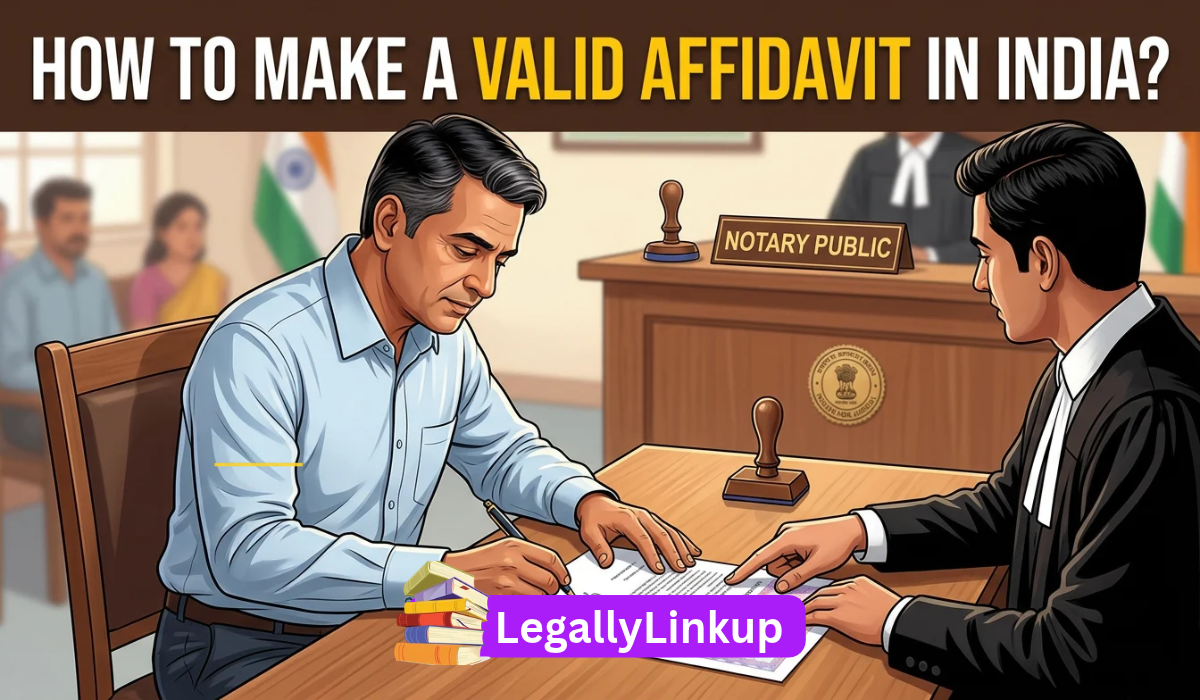
An affidavit is a written statement in which a person declares that the information provided by them is true and correct to the best of their knowledge and belief. It is generally made under oath or affirmation and is used for various legal, administrative and official purposes.
Affidavits are commonly required for matters such as name changes, address-related declarations, educational records, property matters, court proceedings and other official applications.
But what makes an affidavit valid, and does every affidavit need to be notarized?
Let’s understand the basics.
What Is an Affidavit?
An affidavit is a sworn written statement of facts made voluntarily by a person known as the deponent.
The deponent confirms that the statements in the affidavit are true. Depending on the purpose and applicable procedure, the affidavit may be sworn or affirmed before a person legally authorized to administer an oath or affirmation.
An affidavit should contain facts that the person making it can properly state based on their knowledge or relevant information.
ALSO READ:-What is Power of Attorney?
What Is an Affidavit Used For?
Affidavits are used for many different purposes. Some common examples include:
- Name change or correction
- Proof or declaration of address
- Date-of-birth-related declarations
- Educational or employment documentation
- Property-related declarations
- Court and legal proceedings
- Certain government applications
- Declaration of facts where an official written statement is required
The exact format and requirements depend on the purpose for which the affidavit is being prepared.
Essential Contents of an Affidavit
Although the format can differ, a basic affidavit generally contains the following information:
1. Title
The document should clearly state that it is an Affidavit.
2. Details of the Deponent
The full name and relevant identification or address details of the person making the affidavit should be mentioned as required.
3. Statements or Facts
The affidavit should clearly set out the facts being declared.
The statements should be accurate, relevant and written in a simple and understandable manner.
4. Verification
The affidavit normally contains a verification clause in which the deponent confirms that the statements are true and correct to the best of their knowledge and belief.
5. Signature
The deponent signs the affidavit as required.
6. Attestation
Depending on the purpose and applicable procedure, the affidavit may need to be sworn or affirmed before a Notary Public, Oath Commissioner, Magistrate or another authorized person.
Does an Affidavit Need Stamp Paper?
There is no single stamp-paper value that applies to every affidavit throughout India.
The applicable stamp duty and requirements can depend on the state, purpose and nature of the affidavit.
Therefore, before preparing an affidavit, it is important to check the requirements applicable in the relevant state and for the specific purpose.
Using the wrong stamp paper or incorrect format may result in the document being rejected by the authority to which it is submitted.
Does an Affidavit Need Notarization?
Not every affidavit necessarily follows the same attestation procedure.
If an authority specifically requires a notarized affidavit, it should be notarized by a Notary Public. In other situations, the relevant authority may prescribe a different method of verification or attestation.
Therefore, do not assume that notarization alone is sufficient. Always check what the concerned authority or institution requires.
Simple Affidavit Format
A basic affidavit may follow a structure such as:
AFFIDAVIT
I, [Full Name], aged [Age], residing at [Address], do hereby solemnly affirm and state as follows:
- That I am the deponent of this affidavit.
- That [state the relevant fact clearly].
- That [state any additional relevant fact].
- That the statements made above are true and correct to the best of my knowledge and belief.
Verification
I, [Full Name], hereby verify that the contents of this affidavit are true and correct to the best of my knowledge and belief and that nothing material has been concealed.
Place: __________
Date: __________
Signature of Deponent
Attestation/Notarization, as applicable
This is only a basic example. The wording and formalities should be modified according to the purpose of the affidavit and the requirements of the concerned authority.
Common Mistakes to Avoid
A small error in an affidavit can cause unnecessary delays. Avoid:
- Incorrect personal details: Check names, dates, addresses and identification details carefully.
- False statements: An affidavit should never contain knowingly false or misleading information.
- Using an outdated format: Some authorities may prescribe a specific format or wording.
- Ignoring stamp-duty requirements: Requirements can differ between states and purposes.
- Missing verification or attestation: Check whether the document needs verification, notarization or another form of attestation.
- Signing at the wrong time: Where the procedure requires the affidavit to be sworn or affirmed before an authorized person, follow the prescribed procedure rather than signing it in advance.
Can an Affidavit Be Used as Proof of Everything?
No. An affidavit is a declaration made by the person signing it. Its evidentiary value depends on the circumstances and applicable law.
An affidavit should not automatically be treated as a substitute for a document that the law specifically requires, such as a registered deed or another prescribed record.
For example, an affidavit by itself does not automatically transfer ownership of property.
Conclusion
An affidavit is a useful legal document for formally declaring facts for courts, government departments, educational institutions and other authorities. However, the required format, stamp duty and attestation can vary depending on its purpose and the applicable state rules.
Before submitting an affidavit, carefully verify the required format and formalities with the concerned authority. For important legal or property matters, professional legal advice can help avoid costly mistakes.
Disclaimer: This article is intended for general informational purposes only and does not constitute legal advice. Affidavit requirements, stamp duty and attestation procedures may vary depending on the purpose, state and applicable law.