Starting a startup is exciting. You may already have your business idea, product, website, logo, marketing strategy, and launch plans ready. But one area many founders ignore in the early stages is legal documentation.
Skipping legal paperwork can create serious problems later—founder disputes, payment conflicts, brand theft, investor concerns, tax penalties, employee issues, or customer complaints.
The most successful startups do not wait for problems to happen. They build legal protection from day one.
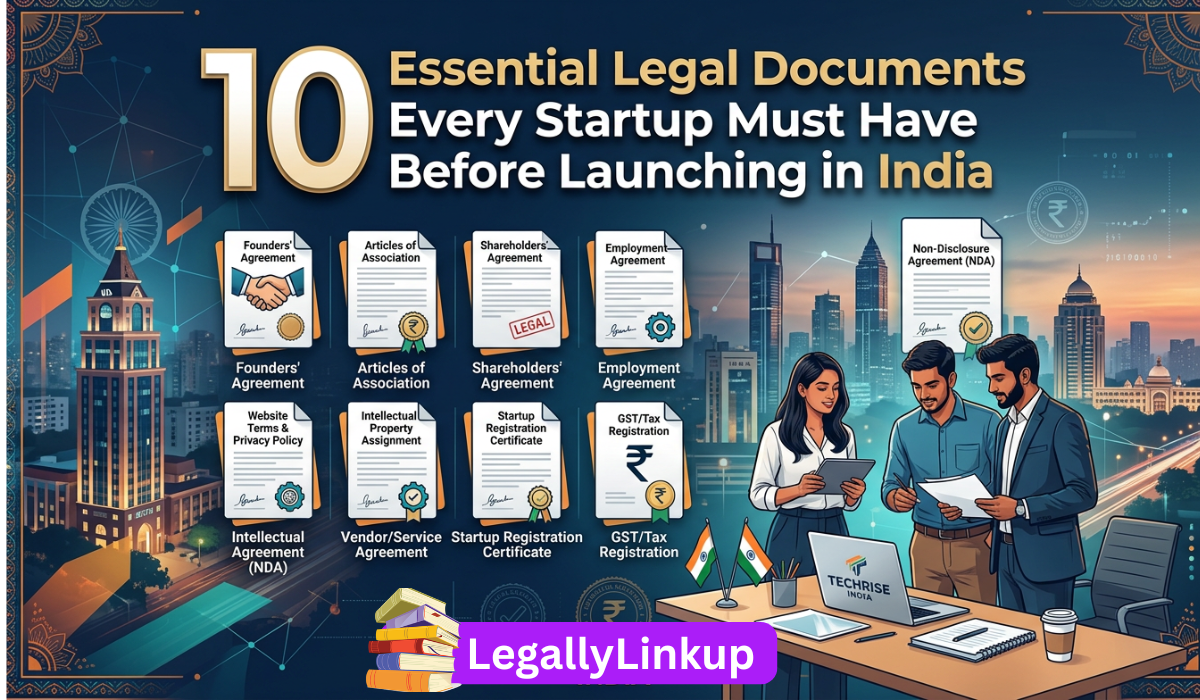
If you are planning to launch a startup in India, here are the 10 essential legal documents every startup should have before going live.
Why Legal Documents Matter for Startups
Legal documents help startups:
- Protect business ownership
- Reduce internal disputes
- Build investor confidence
- Protect intellectual property
- Handle customer issues professionally
- Maintain regulatory compliance
- Scale safely
Whether you run a tech startup, e-commerce business, consulting firm, digital brand, or service business, legal paperwork matters.
1. Business Registration Documents
The first legal requirement is choosing and registering your business structure.
Common startup structures include:
- Sole Proprietorship
- Partnership Firm
- Limited Liability Partnership (LLP)
- Private Limited Company
Your registration documents help establish:
- Business identity
- Ownership structure
- Legal existence
- Compliance obligations
The right structure can affect taxes, liability, and growth opportunities.
2. Founders Agreement
If you have co-founders, a Founders Agreement is one of the most important documents.
Many startups fail because founders trust verbal discussions instead of written agreements.
A founders agreement may define:
- Ownership percentage
- Roles and responsibilities
- Decision-making rights
- Profit sharing
- Exit conditions
- Equity allocation
- Conflict resolution process
This document helps prevent future disputes.
3. Non-Disclosure Agreement (NDA)
A Non-Disclosure Agreement (NDA) protects confidential business information.
This may include:
- Business plans
- Product ideas
- Customer data
- Marketing strategies
- Pricing models
- Technical systems
- Investor discussions
NDAs may be useful when dealing with:
- Employees
- Freelancers
- Vendors
- Developers
- Designers
- Consultants
- Potential investors
Protecting confidential information early can be critical.
4. Employment Agreement
If your startup hires employees, written employment contracts are essential.
An employment agreement may define:
- Job role
- Salary structure
- Working hours
- Leave policy
- Confidentiality obligations
- Termination conditions
- Intellectual property ownership
This creates clarity for both employer and employee.
5. Offer Letter and Appointment Letter
Before onboarding team members, startups often issue formal hiring documents.
These documents may include:
- Position offered
- Compensation terms
- Joining date
- Reporting structure
- Company policies
Proper hiring documentation supports professional HR practices.
6. Vendor or Supplier Agreement
If your startup depends on manufacturers, suppliers, packaging vendors, software developers, or service providers, written agreements matter.
A vendor agreement may define:
- Product quality expectations
- Pricing terms
- Delivery timelines
- Payment schedules
- Liability terms
- Replacement conditions
This reduces commercial disputes.
7. Service Agreement or Client Contract
If your startup provides services, contracts with clients are essential.
This may apply to:
- Marketing agencies
- Consultants
- Software companies
- Designers
- Coaches
- Legal consultants
A service agreement may define:
- Scope of work
- Deliverables
- Timelines
- Payment terms
- Revision policies
- Termination rights
This protects revenue and expectations.
8. Trademark and Brand Protection Documents
Your brand may become one of your startup’s most valuable assets.
Protecting your business identity may involve:
- Brand name search
- Logo ownership records
- Trademark application documents
Trademark protection may help secure:
- Business name
- Product name
- Logo
- Tagline
- Packaging identity
Brand conflicts can become expensive later.
9. Website Legal Policies
If your startup operates online, website legal policies are extremely important.
Common policies include:
- Privacy Policy
- Explains how customer information is collected and used.
- Terms and Conditions
- Defines platform rules and user obligations.
- Refund Policy
- Clarifies product returns or service cancellations.
- Shipping Policy
- Defines delivery expectations.
These policies help reduce disputes and build customer trust.
10. Tax and Financial Compliance Documents
Startups must organize financial compliance from the beginning.
Important records may include:
- Tax registrations (where applicable)
- Invoice formats
- Payment records
- Expense records
- Banking documents
- Accounting records
Tax-related official information is available through:
- GST Portal
- Proper compliance helps avoid penalties and supports growth.
- Bonus Documents Startups Should Also Consider
Depending on your business model, additional documents may be useful:
Intellectual Property Assignment Agreement
Useful when:
- Freelancers create your logo
- Developers build your software
- Designers create product assets
This helps clarify ownership.
Shareholder Agreement
Important for startups with investors or multiple shareholders.
Partnership Agreement
Important for partnership-based businesses.
Investor Term Sheets
Useful during fundraising discussions.
Common Legal Mistakes Startup Founders Make
Avoid these common mistakes:
- Launching Without Written Agreements-Verbal promises often lead to disputes.
- Choosing a Brand Name Without Trademark Search-This may create rebranding costs later.
- Hiring Without Contracts-This may create ownership and employment disputes.
- Copying Website Content or Branding-This may create intellectual property risks.
- Mixing Personal and Business Finances-This creates accounting and tax confusion.
Startup Legal Checklist Before Launch
Before launching your startup, confirm:
✅ Business structure chosen
✅ Registration documents completed
✅ Founders agreement prepared
✅ NDA ready
✅ Employment contracts prepared
✅ Vendor agreements signed
✅ Client contracts ready
✅ Brand protection reviewed
✅ Website policies published
✅ Financial compliance system ready
Final Thoughts
Startups often focus on product development, sales, and marketing—but legal foundations are what help businesses survive and scale.
Strong legal documentation protects your business, your team, your brand, and your future growth. Taking the time to prepare these essential legal documents before launch can save years of conflict, financial loss, and operational risk.
Know Your Rights. Protect Your Future. — LegallyLinkUp