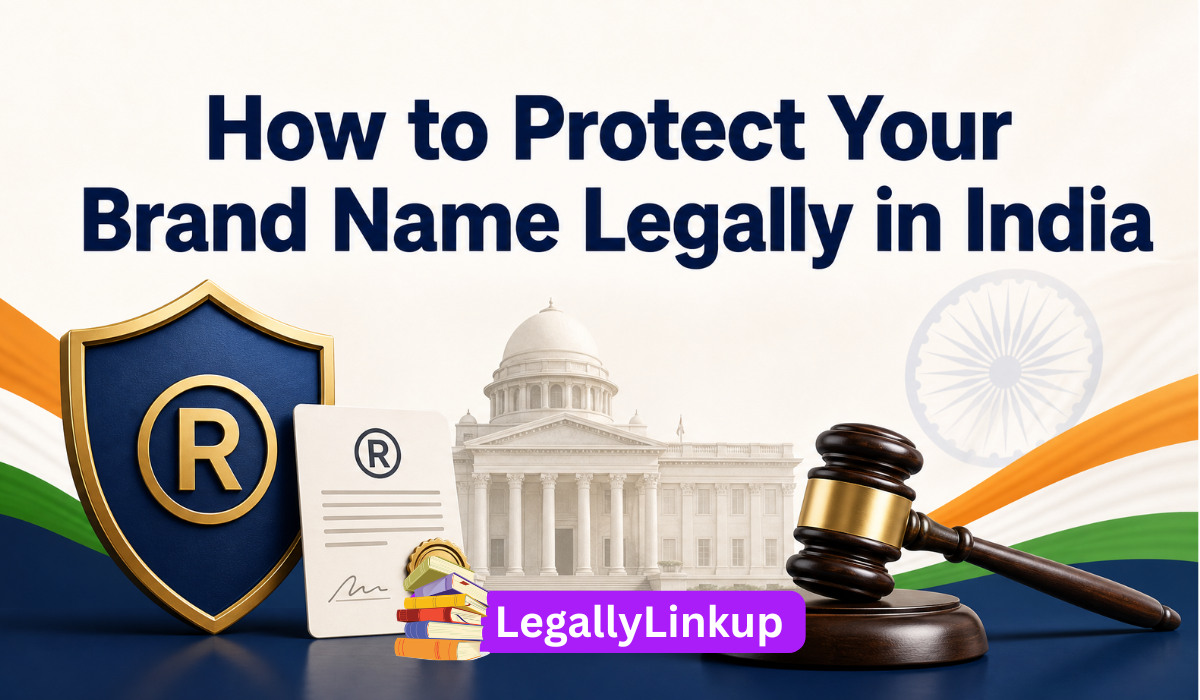
Building a brand takes time, money, creativity, and trust. Whether you run an e-commerce business, legal consultancy, startup, blog, handmade product business, coaching service, or digital company—your brand name often becomes one of your most valuable assets.
But many entrepreneurs make a costly mistake: they spend months building a business identity without legally protecting their brand name.
Then one day they discover:
- Someone is using a similar brand name
- A competitor registered the name first
- Customers are confused between businesses
- Social media usernames are unavailable
- Trademark objections delay expansion
This is why brand protection matters from day one.
If you are starting or growing a business in India, this guide explains how to legally protect your brand name, avoid trademark disputes, and build long-term brand security.
Why Your Brand Name Needs Legal Protection
Your brand name is more than a name.
It represents:
- Business reputation
- Customer trust
- Marketing investment
- Online identity
- Product recognition
- Business goodwill
Without legal protection, someone else may attempt to use similar branding.
This can create:
- Customer confusion
- Lost sales
- Reputation damage
- Expensive rebranding
- Legal disputes
Brand protection is a business strategy—not just a legal formality.
What Is a Brand Name?
A brand name is the identity customers recognize.
Examples include:
- Business names
- Product names
- Service names
- Website brand names
- E-commerce brand names
- Consulting brand identities
Protecting it early can strengthen your market position.
What Is Trademark Protection?
A Trademark helps legally protect your brand identity.
Trademark protection may apply to:
- Brand names
- Logos
- Taglines
- Symbols
- Product labels
- Packaging identity
A trademark can help prevent others from using confusingly similar branding in related business categories.
Step 1: Choose a Strong Brand Name
The first step is choosing a unique brand name.
Strong brand names are often:
- Distinctive
- Memorable
- Easy to pronounce
- Easy to search online
- Difficult to confuse with competitors
Avoid generic names like:
- Best Legal Services
- Fast Consulting Solutions
- Online Shop India
Unique names are often easier to protect.
Step 2: Check Existing Brand Availability
Before launching, search whether your brand name is already being used.
Check:
- Existing businesses
- Domain names
- Social media handles
- Marketplace sellers
- Trademark databases
This helps avoid conflicts later.
Even if a name looks available online, legal conflicts may still exist.
Proper verification matters.
Step 3: Conduct a Trademark Search
A trademark search helps identify similar or conflicting marks.
This step can help reduce risks such as:
- Trademark objections
- Rebranding expenses
- Legal notices
- Customer confusion
A trademark search is often one of the smartest steps before investing in packaging, advertising, or website development.
Step 4: Secure Domain Names and Social Media Handles
Your digital identity matters.
Once your brand name is selected, secure:
- Website domain
- Social media usernames
- Business email identity
- Marketplace seller identity
Examples:
- Website domain
- Instagram profile
- Facebook page
- LinkedIn presence
Consistency helps brand recognition.
Step 5: File Trademark Protection
If your business is serious about long-term growth, trademark filing may be worth considering.
Trademark filing may help protect:
- Brand identity
- Product labels
- Marketing reputation
- Expansion rights
Businesses often consider trademark protection before:
- Launching products
- Scaling online ads
- Entering marketplaces
- Expanding nationally
- Working with distributors
Step 6: Protect Your Logo and Tagline
Many businesses focus only on the brand name.
But logos and taglines can also carry business value.
Examples:
Logo → Your visual identity
Tagline → Your customer message
Consistent branding can strengthen legal and commercial value.
Step 7: Use Your Brand Consistently
Brand protection also depends on actual use.
Use your brand consistently across:
- Packaging
- Website
- Social media
- Invoices
- Email signatures
- Product labels
- Marketing campaigns
Consistent use helps strengthen market recognition.
Step 8: Keep Proof of Brand Usage
Maintain records such as:
- Website launch dates
- Social media creation dates
- Product packaging samples
- Invoices
- Marketing materials
- Design files
These records may help support ownership claims.
Step 9: Watch for Copycats
After launching, monitor the market for:
- Similar business names
- Duplicate logos
- Copied packaging
- Fake seller accounts
- Misleading online listings
Early detection can prevent bigger disputes.
Step 10: Take Action If Someone Copies Your Brand
If someone uses a confusingly similar brand, you may consider professional legal advice.
Possible actions may include:
- Trademark opposition
- Cease-and-desist communication
- Negotiation
- Platform complaints
- Legal notices
The right response depends on facts and legal rights.
Common Brand Protection Mistakes
Many businesses make avoidable mistakes.
1. Launching First, Protecting Later
By then, someone else may already claim similar rights.
2. Assuming Company Registration Protects the Brand
Business registration and trademark protection are not always the same.
Different legal protections may apply.
3. Copying Competitor Branding
Even “inspired” branding may create disputes.
4. Ignoring Digital Availability
If your domain or social handles are unavailable, branding may become inconsistent.
5. Not Documenting Ownership
Without records, proving ownership may become difficult.
Who Should Protect Their Brand?
Brand protection may be valuable for:
- Startups
- Bloggers
- Law firms
- Consultants
- E-commerce sellers
- Handmade product brands
- Coaches
- Content creators
- Agencies
- Product manufacturers
If customers recognize your name, your brand already has value.
Brand Protection Checklist
Before launching, confirm:
✅ Brand name selected
✅ Trademark search completed
✅ Domain secured
✅ Social media handles reserved
✅ Logo finalized
✅ Tagline reviewed
✅ Usage records maintained
✅ Packaging identity secured
Final Thoughts
Your brand name can become one of your most valuable business assets.
Protecting it early can help prevent confusion, disputes, copycats, and expensive rebranding.
Whether you run a startup, blog, online store, consulting business, or creative brand, legal brand protection should be part of your growth strategy from day one.
Know Your Rights. Protect Your Future. — LegallyLinkUp