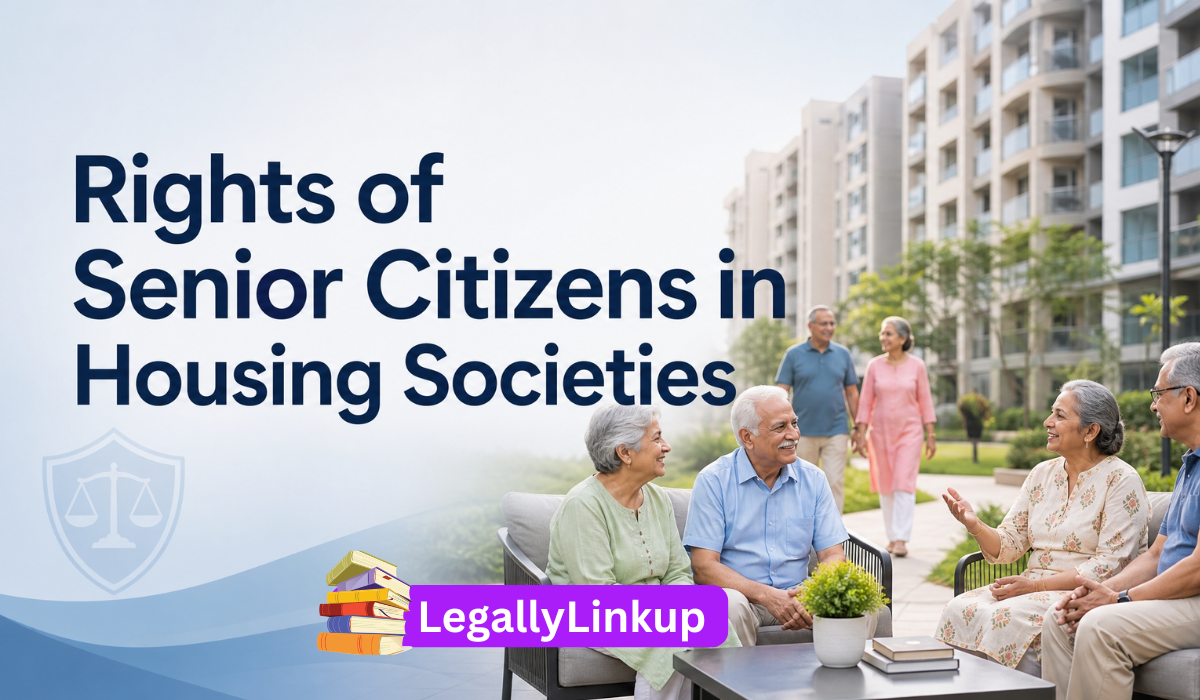
Senior citizens are an important part of every residential community. Housing societies have a responsibility to ensure a safe, respectful, and comfortable environment for elderly residents. However, disputes may sometimes arise regarding maintenance, security, use of facilities, harassment, or access to essential services.
Understanding the legal rights of senior citizens in housing societies helps elderly residents and their families protect their interests.
Importance of Protecting Senior Citizens in Housing Societies
Many senior citizens spend their later years in housing societies where they depend on proper management and community support.
A society should ensure:
- Safety and security of elderly residents
- Easy access to common facilities
- Respectful treatment by other members
- Proper maintenance of essential services
- A peaceful living environment
Senior citizens have the same rights as other members, along with certain protections available under law.
Right to Safe and Peaceful Living
Every resident, including senior citizens, has the right to live in a safe and peaceful environment.
A housing society should take reasonable steps to prevent:
- Harassment by other residents
- Threats or intimidation
- Disturbance affecting elderly members
- Misuse of common areas
Senior citizens should not be forced to leave their homes due to unfair treatment or pressure.
Right to Equal Treatment
Senior citizens cannot be discriminated against in society matters.
They have the right to:
- Participate in society activities
- Use common facilities
- Attend general body meetings
- Express opinions on society decisions
Age alone cannot be a reason to deny basic rights.
Right to Access Society Facilities
Senior citizens have the right to use common facilities according to society rules.
These may include:
- Lifts
- Gardens
- Community spaces
- Walking areas
- Security services
Societies should consider the needs of elderly residents while planning facilities.
Maintenance and Service Rights
Senior citizens are responsible for paying applicable maintenance charges like other members. However, they also have the right to receive proper services for the charges paid.
They can raise concerns regarding:
- Poor maintenance
- Lack of security
- Repair issues
- Failure of essential facilities
A society must handle complaints fairly.
Right to Participate in Society Decisions
Senior citizens who are eligible members can participate in society decisions.
They may:
- Attend meetings
- Vote in elections (if eligible)
- Raise concerns
- Suggest improvements
Their experience can contribute positively to society management.
Problems Faced by Senior Citizens in Housing Societies
1. Harassment or Disturbance
Some elderly residents may face conflicts with neighbors, unnecessary complaints, or pressure from others.
Such behavior can affect their mental peace and security.
2. Difficulty With Society Procedures
Complex procedures, digital communication, or lack of assistance may create challenges for elderly members.
Societies should maintain clear and accessible communication.
3. Security Concerns
Senior citizens living alone may require additional safety measures.
Societies can improve security through:
- Proper entry systems
- Security staff
- Emergency contact arrangements
4. Maintenance and Repair Issues
Elderly residents may face difficulties when repairs or essential services are delayed.
Society management should respond responsibly to such concerns.
Legal Protection for Senior Citizens
Senior citizens in India are protected under various laws and welfare measures, including provisions related to maintenance and protection of elderly persons.
These laws aim to ensure that senior citizens can live with dignity and security.
Housing societies should cooperate with these protections and avoid actions that negatively affect elderly residents.
What Can Senior Citizens Do If They Face Problems?
1. Approach the Managing Committee
The first step is usually submitting a written complaint to the society committee.
The complaint should include:
- Details of the issue
- Date and circumstances
- Requested action
2. Raise the Matter in Society Meetings
If the issue affects society functioning, it can be discussed during general body meetings.
3. Approach Appropriate Authorities
If the issue involves serious harassment, safety concerns, or violation of rights, senior citizens may approach appropriate authorities for assistance.
4. Seek Legal Advice
For serious disputes involving property rights or continued harassment, legal guidance may help determine available remedies.
Duties of Society Members Towards Senior Citizens
A cooperative society depends on mutual respect. Members should:
- Treat elderly residents respectfully
- Avoid unnecessary conflicts
- Help maintain a supportive environment
- Report safety concerns when necessary
- A caring community benefit everyone.
Conclusion
Senior citizens have the right to live with dignity, safety, and respect in housing societies. They are entitled to equal treatment, access to facilities, and participation in society matters.
A responsible housing society should protect elderly residents and ensure that rules are applied fairly. Awareness of rights and duties helps create a peaceful and supportive community for all members.