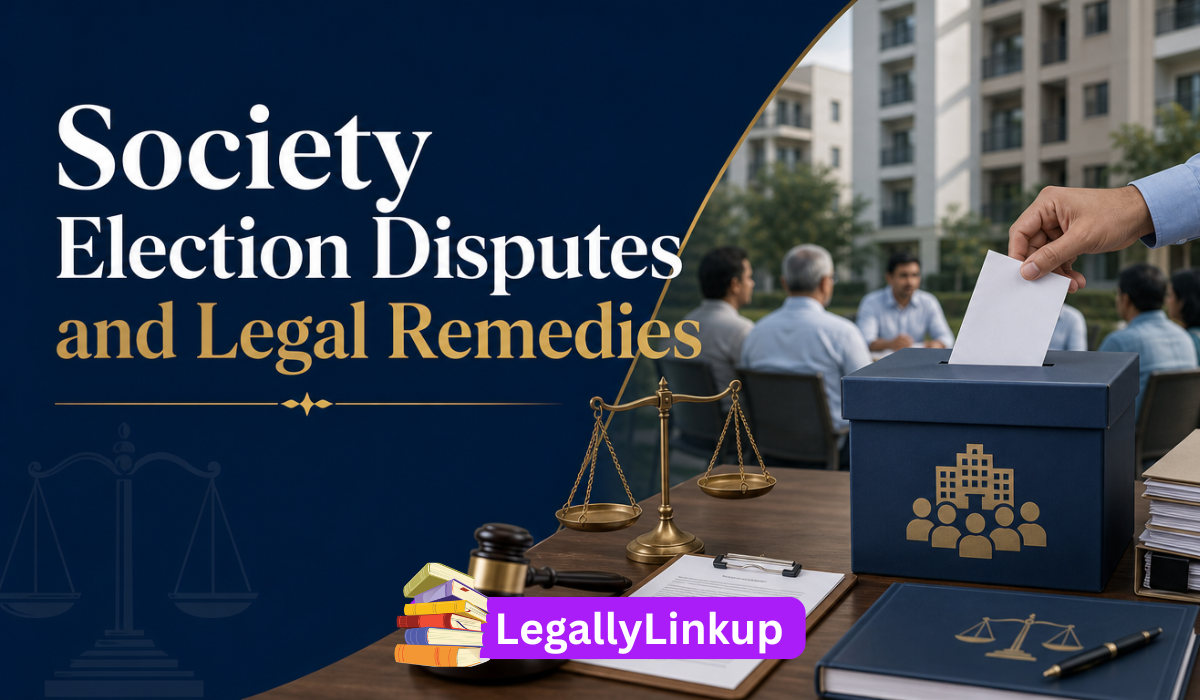
The managing committee of a housing society plays an important role in handling daily administration, finances, maintenance, and decision-making. Since committee members are elected by society members, the election process must be fair, transparent, and conducted according to applicable rules.
However, disputes may arise during or after society elections due to allegations of unfair practices, improper procedures, or violation of election rules. Understanding the causes of election disputes and available legal remedies helps members protect their rights.
What Are Housing Society Election Disputes?
Society election disputes are disagreements related to the process of selecting the managing committee members.
These disputes may involve:
- Improper election procedure
- Violation of society bye-laws
- Unfair voting practices
- Disqualification of candidates
- Objections regarding voter lists
- Disputes over election results
The purpose of election rules is to ensure that members can choose representatives through a fair process.
Importance of Fair Elections in Housing Societies
A managing committee makes important decisions regarding:
- Maintenance and repairs
- Society finances
- Member complaints
- Use of common facilities
- Future development plans
An unfair election can affect the entire society because the elected committee controls important administrative matters.
Common Causes of Election Disputes
1. Incorrect Voter List
A dispute may arise when:
- Eligible members are excluded
- Ineligible persons are included
- Membership records are not updated properly
The voter list should be prepared according to society records and applicable rules.
2. Violation of Election Procedure
Society elections must follow the prescribed process, including:
- Proper notice
- Election schedule
- Nomination process
- Voting procedure
- Declaration of results
Failure to follow these steps can lead to objections.
3. Disqualification of Candidates
Candidates may be challenged due to issues such as:
- Not meeting eligibility requirements
- Pending dues (where rules apply)
- Violation of society regulations
Any disqualification should be based on valid rules.
4. Unfair Voting Practices
Concerns may arise regarding:
- Improper influence on voters
- Manipulation of voting procedures
- Lack of transparency
Members have the right to expect a fair election environment.
5. Disputes After Election Results
Even after results are announced, members may challenge elections if they believe rules were not followed.
Role of Society Bye-Laws in Elections
Society bye-laws generally explain:
- Election process
- Eligibility of voters and candidates
- Term of the committee
- Responsibilities of elected members
- Procedure for conducting meetings
The managing committee must follow these rules while organizing elections.
Rights of Society Members During Elections
Members generally have the right to:
1. Participate in Elections
Eligible members can vote and, where allowed, contest elections.
2. Receive Election Information
Members should receive proper information about:
- Election dates
- Candidate details
- Voting procedure
3. Question Unfair Practices
If members believe the process is unfair, they can raise objections through proper channels.
Legal Remedies for Society Election Disputes
1. Raise Objection Before the Society
The first step is usually to submit a written complaint to the concerned society authority.
The complaint should mention:
- Details of the dispute
- Relevant facts
- Supporting documents or evidence
2. Approach the Election Authority
In many cases, co-operative society elections are supervised according to state-specific rules. Members may approach the appropriate election authority if there is a violation of election procedures.
3. Approach the Registrar of Co-operative Societies
The Registrar can examine complaints related to the functioning of registered co-operative societies.
Issues may include:
- Violation of bye-laws
- Improper administration
- Election-related concerns
4. Seek Legal Remedy
Depending on the nature of the dispute, members may approach the appropriate legal forum for resolution.
Legal advice may help identify the correct procedure.
Responsibilities of an Elected Managing Committee
After election, committee members must:
- Act in the interest of all members
- Maintain proper records
- Use society funds responsibly
- Follow legal requirements
- Avoid misuse of authority
Winning an election does not give unlimited power to committee members.
How Can Election Disputes Be Avoided?
Societies can reduce conflicts by:
- Maintaining updated member records
- Following bye-laws carefully
- Providing proper notices
- Keeping election procedures transparent
- Allowing fair participation
Clear communication builds trust among members.
Conclusion
Society elections are an important part of democratic functioning in housing communities. A fair election process ensures that members choose responsible representatives.
When disputes occur, members have legal remedies available through society procedures and appropriate authorities. Awareness of election rules helps maintain transparency and protects the rights of all residents.