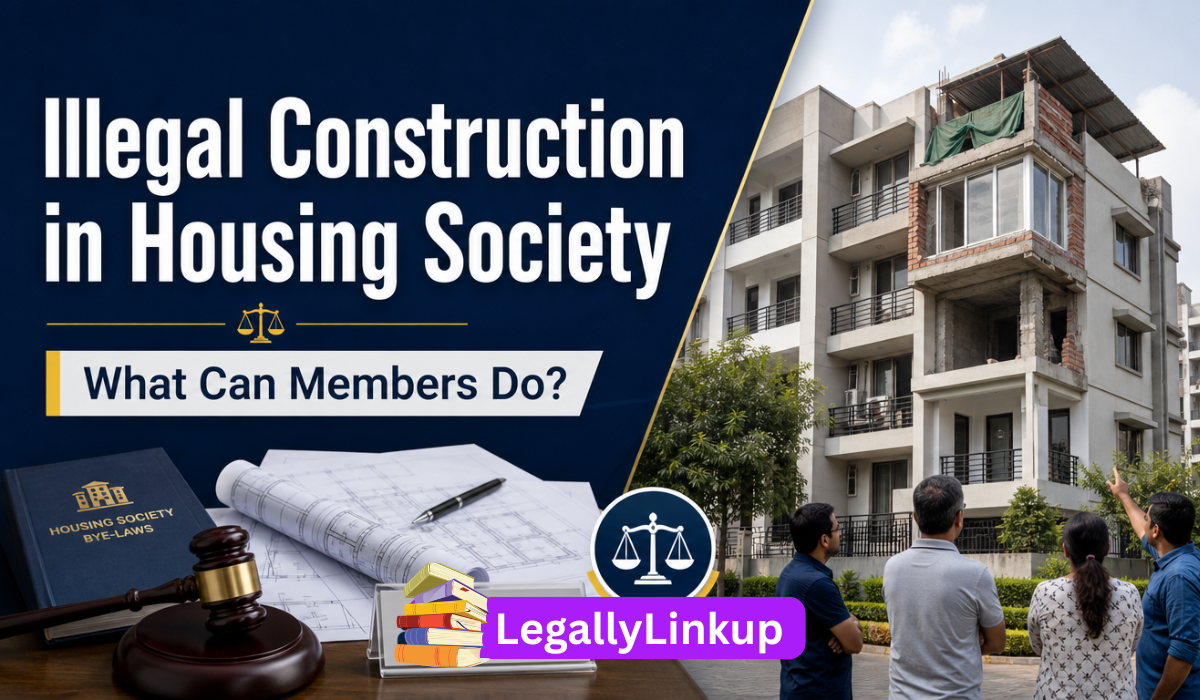
Housing societies are created to provide safe and organized residential communities. However, problems may arise when members carry out unauthorized construction or modifications in their flats or common areas without following legal procedures.
Illegal construction can affect building safety, property value, and the rights of other residents. Understanding what counts as unauthorized construction and the legal steps available helps society members protect their interests.
What Is Illegal Construction in a Housing Society?
Illegal construction refers to any building work or alteration that is done without required permission or in violation of approved plans, society rules, or applicable laws.
Examples may include:
- Structural changes in a flat
- Extending balconies or rooms
- Changing common areas into private spaces
- Constructing unauthorized rooms or sheds
- Blocking passages or emergency areas
- Altering building structure without approval
Not every renovation is illegal. Minor internal changes may be allowed, but changes affecting safety or common property usually require permission.
Why Is Unauthorized Construction a Serious Issue?
A housing society is a shared residential space. Any unauthorized change can affect other members.
Possible problems include:
1. Safety Risks
Changes to walls, columns, or building structures can weaken the building and create safety concerns.
2. Damage to Common Property
Construction in shared areas may reduce access to facilities such as:
- Staircases
- Lifts
- Corridors
- Parking areas
- Open spaces
3. Legal and Financial Problems
Unauthorized construction may lead to:
- Notices from local authorities
- Penalties
- Removal orders
- Disputes between residents
Common Types of Illegal Construction
1. Structural Alterations
Removing walls, changing layouts, or making major modifications without approval may affect the building structure.
2. Extension of Flat Area
Some residents extend balconies, terraces, or rooms beyond approved limits.
Such extensions may violate building permissions.
3. Encroachment on Common Areas
Common spaces belong to all members. Converting them into private use can create disputes.
Examples:
- Occupying corridors
- Covering open areas
- Blocking shared spaces
4. Unauthorized Commercial Use
Using a residential flat for commercial activities may violate society rules and local regulations depending on the activity.
Role of Housing Society in Illegal Construction
The managing committee has a responsibility to maintain discipline and protect common interests.
The society can:
- Inform the member about violations
- Ask for documents and approvals
- Issue notices according to rules
- Discuss the matter in general meetings
- Approach relevant authorities if required
The committee must follow proper procedure and cannot take arbitrary action.
Rights of Members Against Illegal Construction
Members have the right to:
1. Raise Complaints
A resident can submit a written complaint to the society regarding unauthorized work.
The complaint should include:
- Details of the issue
- Location of construction
- Supporting evidence if available
2. Request Transparency
Members can ask the society whether necessary approvals were obtained.
3. Protect Common Areas
No individual member has the right to permanently occupy or modify common property without legal permission.
What Can Be Done If the Society Takes No Action?
If the managing committee ignores a genuine complaint, members may:
1. Raise the Issue in a General Body Meeting
Members can request discussion and action through society procedures.
2. Approach Local Authorities
Depending on the issue, complaints may be made to the relevant municipal or planning authority.
Authorities may inspect the construction and take action according to applicable rules.
3. Seek Legal Remedies
For serious disputes affecting property rights or safety, members may seek legal advice and appropriate remedies.
How Can Members Prevent Illegal Construction?
Residents can help maintain a safe society by:
- Reporting unauthorized changes early
- Understanding society rules
- Checking approvals before major renovations
- Participating in society decisions
Societies should also maintain records of permissions and approved modifications.
Conclusion
Illegal construction in housing societies can create safety risks and legal complications. While flat owners have the right to enjoy their property, they must follow building regulations and society rules.
Members should act responsibly, and societies should maintain transparency while handling complaints. Proper procedures, awareness, and cooperation help protect the interests of all residents.