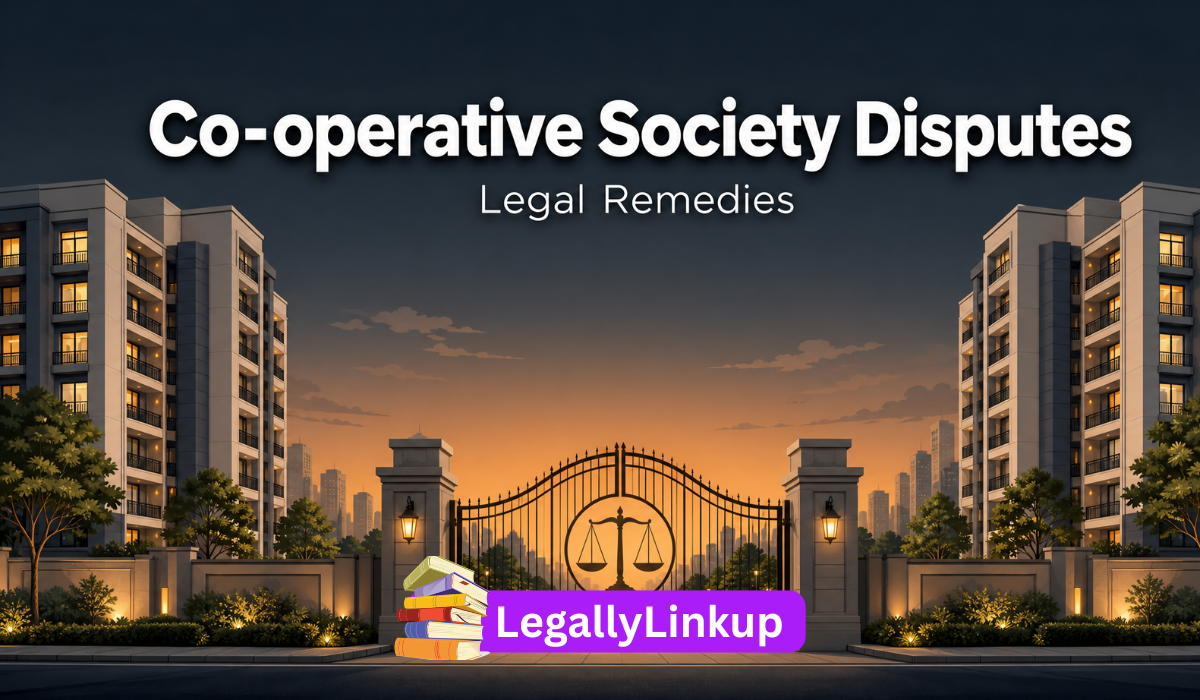
Co-operative societies play an important role in providing housing, financial services, and community-based support to members. However, disputes may arise between members and society management due to issues such as maintenance charges, membership problems, elections, financial mismanagement, or violation of society rules.
Understanding the common causes of disputes and available legal remedies helps members protect their rights and resolve conflicts effectively.
What Are Co-operative Society Disputes?
A co-operative society dispute is a disagreement related to the functioning, management, or decisions of a registered co-operative society. These disputes may occur between:
- Members and the managing committee
- Two or more members
- Society and service providers
- Society and employees
Most disputes are governed by the applicable state co-operative society laws and the registered bye-laws of the society.
Common Types of Co-operative Society Disputes
1. Maintenance Charge Disputes
Maintenance charges are collected for services such as security, repairs, cleaning, water supply, and common electricity.
Disputes may arise when:
- Members feel charges are unfair
- The society increases charges without proper approval
- There is a disagreement about outstanding dues
Members have the right to ask for clarification regarding how charges are calculated and used.
2. Membership Related Disputes
Issues may occur regarding:
- Admission of new members
- Rejection of membership applications
- Transfer of membership after sale or inheritance
- Removal or termination of membership
A society must follow the procedure provided under its bye-laws and applicable law.
3. Election Disputes
Managing committee elections can become a source of conflict when members raise concerns about:
- Improper election procedure
- Unfair voting practices
- Violation of election rules
Members can challenge such issues through appropriate legal channels.
4. Mismanagement of Society Funds
A society manages funds collected from members. Disputes may arise due to:
- Lack of transparency
- Improper use of funds
- Failure to maintain accounts
- Suspicion of financial irregularities
Members generally have the right to inspect relevant records and raise concerns.
5. Parking and Common Area Disputes
Parking spaces and common facilities often create disagreements.
Common issues include:
- Unauthorized parking
- Disputes over parking allocation
- Blocking common areas
- Unauthorized use of society premises
The society must follow approved rules while resolving such matters.
Legal Remedies Available for Members
1. Complaint Before the Managing Committee
The first step is usually submitting a written complaint to the society committee.
Members should clearly mention:
- Nature of the problem
- Relevant facts
- Documents or evidence
- Expected solution
A written complaint creates an official record.
2. Raising the Issue in a General Body Meeting
The general body is the decision-making authority of the society. Members can raise important issues during meetings and request discussion or action.
This method is useful for matters affecting multiple members.
3. Approaching the Registrar of Co-operative Societies
The Registrar of Co-operative Societies supervises registered co-operative societies.
Members may approach the Registrar regarding issues involving:
- Mismanagement
- Violation of bye-laws
- Improper functioning of the society
- Election-related concerns
The Registrar may conduct inquiry or take action according to applicable law.
4. Co-operative Court or Appropriate Legal Forum
Certain disputes involving co-operative societies may be taken before the appropriate co-operative dispute resolution authority.
This may include disputes related to:
- Rights of members
- Society management
- Financial matters
- Legal obligations
5. Consumer Protection Remedies
In some situations, members may approach consumer forums if they are receiving deficient services from the society, depending on the nature of the issue.
Role of Society Bye-Laws in Disputes
Bye-laws act as a guide for resolving internal issues. They explain:
- Member rights
- Committee powers
- Meeting procedures
- Complaint processes
- Rules for society management
Both members and committees must follow these rules.
How Members Can Prevent Disputes
Members can reduce conflicts by:
- Reading society bye-laws
- Attending general meetings
- Keeping records of payments and complaints
- Communicating through written applications
- Participating in society decisions
Transparency and cooperation help maintain a healthy society environment.
Conclusion
Co-operative society disputes are common, but they can often be resolved through proper communication and legal procedures. Members have the right to question unfair decisions and seek remedies when society rules are not followed.
Knowing the available legal options helps members protect their interests while ensuring the society continues to function smoothly.