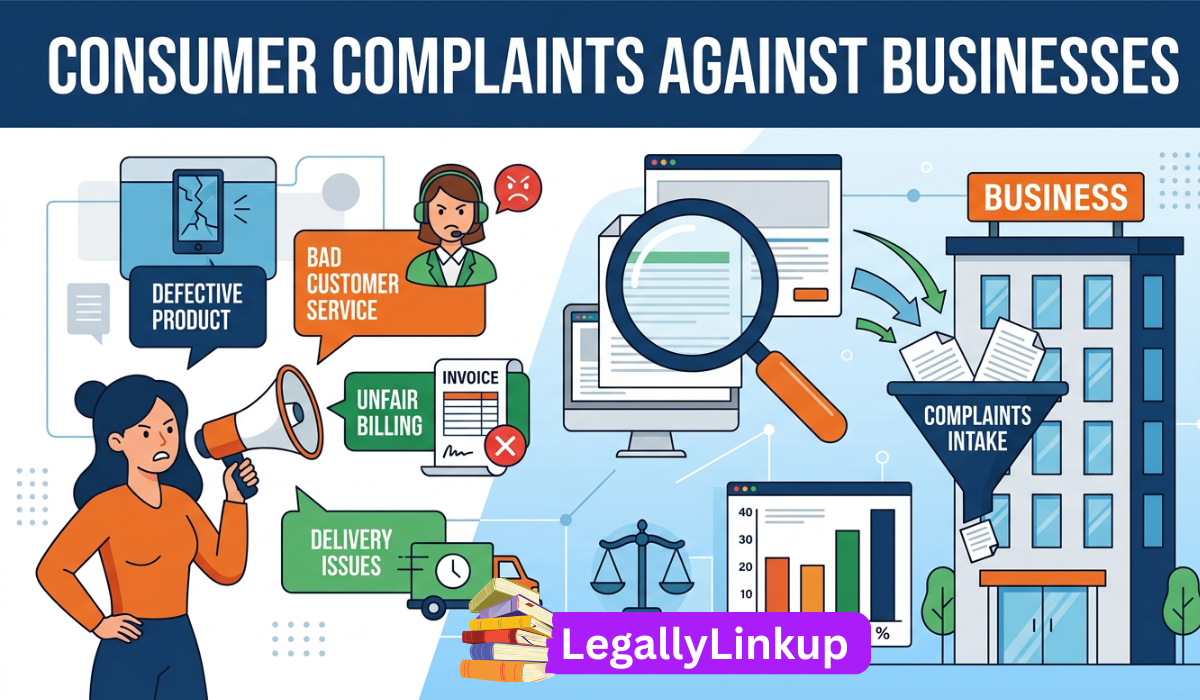
Businesses provide products and services to customers every day, but sometimes disputes may arise due to defective products, poor services, unfair practices, or misleading information. When customers face such issues, they have the right to seek legal remedies through consumer protection laws.
A consumer complaint is a formal grievance raised by a customer against a business for failing to provide satisfactory products or services. Understanding the consumer complaint process helps both consumers and businesses handle disputes effectively.
What Is a Consumer Complaint?
A consumer complaint is a legal claim made by a customer when they experience problems with goods or services purchased from a business.
Common reasons for filing complaints include:
- Defective or damaged products
- Poor-quality services
- Delay in delivery
- Overcharging
- False advertisements
- Failure to provide promised services
- Unfair business practices
Consumer protection laws aim to ensure fair treatment and accountability in business transactions.
Consumer Rights Against Businesses
Consumers generally have important rights, including:
1. Right to Safety
Customers have the right to protection from products that may cause harm or injury.
2. Right to Information
Businesses must provide accurate information about products and services, including price, quality, features, and terms.
3. Right to Choose
Consumers should have access to different products and services at fair prices without unfair restrictions.
4. Right to Seek Compensation
If a consumer suffers loss due to defective products or poor services, they may seek remedies such as replacement, refund, or compensation.
Common Types of Consumer Disputes
1. Defective Product Complaints
A customer may file a complaint if a product does not work properly, is damaged, or does not meet promised standards.
Examples include:
- Faulty electronics
- Defective appliances
- Poor-quality goods
2. Service Deficiency Complaints
Businesses may face complaints when services are not provided as promised.
Examples include:
- Delayed services
- Incomplete work
- Poor professional services
3. Misleading Advertisement Issues
If a business makes false claims about a product or service, consumers can raise complaints for unfair practices.
4. Online Shopping Disputes
With the growth of e-commerce, complaints may arise regarding:
- Wrong products
- Non-delivery
- Refund problems
- Misleading product descriptions
How Can Consumers File a Complaint?
Consumers can usually follow these steps:
Step 1: Contact the Business
The first step is to approach the company and explain the issue. Many disputes can be resolved through customer support or internal complaint systems.
Step 2: Send a Formal Complaint
If the issue is not resolved, the consumer may send a written complaint mentioning:
- Details of purchase
- Problem faced
- Supporting documents
- Expected solution
Step 3: Approach Consumer Dispute Resolution Forums
If the business fails to provide a solution, the consumer may approach the appropriate consumer dispute resolution authority.
The complaint may request remedies such as:
- Replacement of product
- Refund
- Repair
- Compensation for loss
How Businesses Can Avoid Consumer Complaints
Businesses can reduce consumer disputes by following good practices:
- Provide accurate product information
- Maintain quality standards
- Offer clear terms and conditions
- Respond quickly to customer concerns
- Maintain proper records
- Follow consumer protection rules
Good customer service and transparency help businesses build trust and avoid legal problems.
Importance of Consumer Protection Compliance for Businesses
Consumer complaints can affect a company’s reputation and customer relationships. Businesses that follow legal requirements and handle complaints professionally can improve customer satisfaction.
Ignoring consumer issues may lead to:
- Financial penalties
- Legal proceedings
- Loss of customer trust
- Damage to brand reputation
Conclusion
Consumer complaints are an important part of business law because they ensure accountability and fair practices. Businesses must understand consumer rights and maintain ethical standards, while consumers should know their legal options when facing unfair treatment.
A fair approach to resolving complaints helps create stronger relationships between businesses and customers.