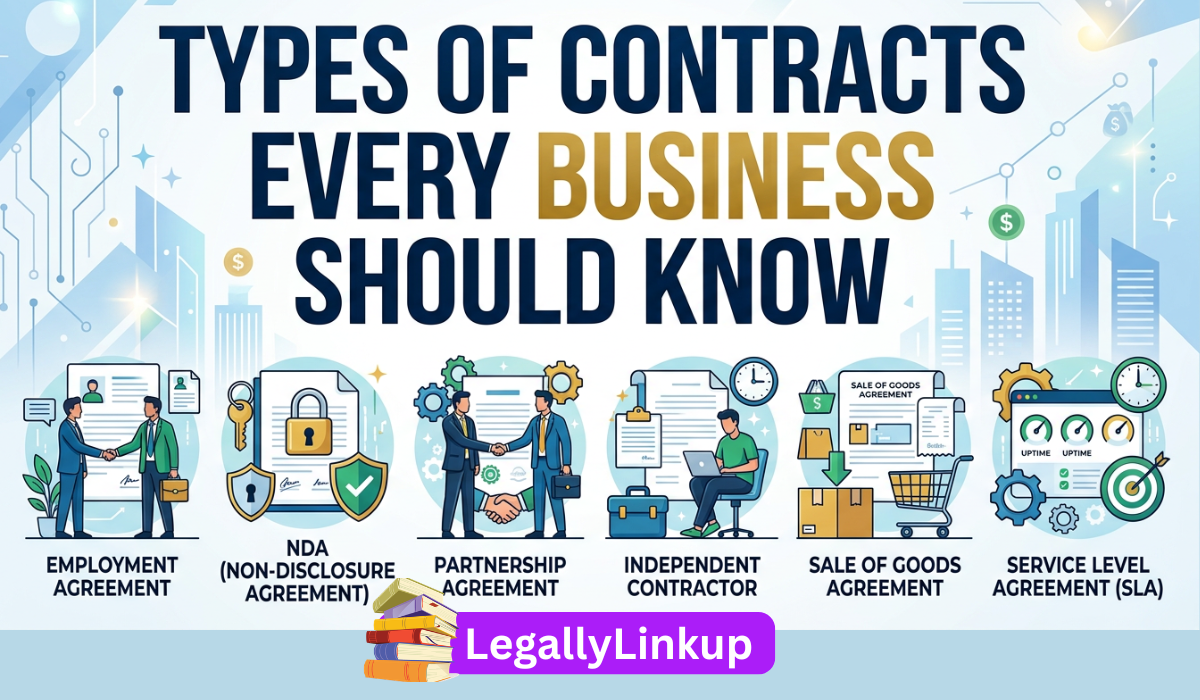
Contracts are an essential part of every business. Whether a company is hiring employees, working with suppliers, selling products, or partnering with another organization, contracts create legal obligations and protect the interests of all parties involved.
A contract clearly defines the rights, duties, responsibilities, and expectations of the parties. Understanding different types of contracts helps business owners make better decisions and avoid legal disputes.
This guide explains the important types of contracts every business should know.
What Is a Contract?
A contract is a legally enforceable agreement between two or more parties.
A valid contract generally requires:
- Offer and acceptance
- Lawful consideration (exchange of value)
- Consent of parties
- Legal purpose
- Competent parties
Contracts can be written or, in some cases, oral, depending on the nature of the agreement and applicable law.
1. Written Contracts
A written contract is a formal agreement documented on paper or electronically.
Examples:
- Business agreements
Read More :-
How to Draft a Simple Business Agreement
- Employment contracts
- Lease agreements
- Vendor agreements
Written contracts are preferred because they provide clear proof of terms and reduce misunderstandings.
2. Oral Contracts
An oral contract is an agreement made through spoken words rather than written documents.
Example:
A small business owner verbally agrees with a supplier to deliver goods at a fixed price.
Although oral agreements may be legally valid in some situations, they can be difficult to prove if a dispute arises.
3. Employment Contracts
Employment contracts define the relationship between an employer and employee.
They usually include:
- Job responsibilities
- Salary details
- Working conditions
- Leave policies
- Confidentiality obligations
A clear employment contract protects both businesses and employees.
4. Partnership Agreements
A partnership agreement is created when two or more people decide to run a business together.
It may include:
- Profit-sharing ratio
- Responsibilities of partners
- Decision-making process
- Business rules
A written partnership agreement helps prevent conflicts among partners.
5. Sales Contracts
A sales contract is an agreement between a buyer and seller for goods or services.
It covers:
- Product details
- Price
- Payment terms
- Delivery conditions
- Warranty obligations
These contracts are common in everyday business transactions.
6. Service Agreements
A service agreement is used when one party provides services to another.
Examples:
- Marketing services
- IT services
- Consulting services
- Professional services
It explains the scope of work, fees, deadlines, and responsibilities.
7. Lease or Rental Agreements
A lease agreement allows a business to use property or equipment for a specific period in exchange for payment.
Examples:
- Office rent
- Machinery lease
- Commercial property agreements
It defines terms such as rent, duration, maintenance, and termination.
8. Non-Disclosure Agreements (NDA)
An NDA is a contract that protects confidential business information.
It prevents parties from sharing sensitive information such as:
- Business plans
- Customer data
- Trade secrets
- New ideas
NDAs are common when businesses work with employees, investors, or partners.
9. Franchise Agreements
A franchise agreement allows one business to use another company’s brand, products, or business model.
It covers:
- Brand usage
- Fees
- Business standards
- Responsibilities
This type of contract is common in franchise-based businesses.
10. Indemnity and Guarantee Contracts
An indemnity contract involves one party promising to compensate another for certain losses.
A guarantee contract involves one party promising to fulfill another person’s obligation if they fail to do so.
These contracts help reduce financial risks in business transactions.
Importance of Business Contracts
Proper contracts help businesses:
- Prevent disputes
- Protect confidential information
- Clarify responsibilities
- Reduce financial risks
- Create legal protection
A well-drafted contract provides certainty and helps businesses operate smoothly.
Conclusion
Contracts are the foundation of business relationships. From employment and sales agreements to partnerships and confidentiality agreements, each contract serves a specific purpose. Business owners should understand the basics of contracts and ensure agreements are clear, legally valid, and properly documented.